
| |
|
| |
| Links: |
A US-based team of researchers has recently developed a microfluidic device for isolating a genomic DNA, which is to be purified later. This DNA is sourced from individual cells and the device physically catches single cells using a micropillar array. It also captures chromosomal DNA of these single cells post-extraction, which is later immobilized in the micropillar array so as to enable the process of isothermal amplification. The entire methodology is referred to as ‘on-chip cell capture and DNA extraction’. As conventional single cell WGA is often prone to amplification biases, which may hold a significant influence on the accuracy of the data of single cell sequencing. This drawback is foreseen to be overcome with the introduction of single cell on-chip WGA, resulting in reduced biases regarding amplification, offering an improved coverage of the genome. The team has used individual cancer cell genomes (human), sourced from the HeLa Cell Line.
WGA has been a crucial procedure that helps in DNA analysis from limited quantities of genomic DNA. The ease provided by various WGA kits available for the entire process has been driving the market over the years. Increasing research activities will remain the key factor pushing the growth of whole genome amplification market over the next decade. Adoption of this process is expected to witness robust growth, predominantly among research institutes, hospitals, diagnostic centers, and forensic labs, as it offers an improved and advanced means of genome amplification and sequencing.
Request Sample Report@ https://www.futuremarketinsights.com/reports/sample/rep-gb-1873
To increase the revenue share, molecular testing companies are focusing more on the development of advanced devices and kits such as WGA kits and complete WGA kits with advanced capabilities. The global whole genome amplification market is estimated at around US$ 4 million by the end of 2028, as indicated by a recent report released by Future Market Insights. The global market for whole genome amplification will possibly expand at a CAGR of 7.7% during the forecast period, 2018-2028.
Single Cell WGA Continues to Bring in New Applications
Introduction of massively parallel single-cell genome sequencing is anticipated to offer a new dimension to the understanding of genetic diversities in complex biological systems. Single cell WGA is a method used to examine the sequence information with the optimized next generation sequencing technologies, only from a single cell. This method is considered to be a powerful tool that helps to understand the ins and outs of genetics by bringing the entire genome structure to a cellular level. Since this method offers a high-resolution view of the genomic sample, its adoption will continue to be on the rise in diverse biological fields such as microbiology, immunology, neurobiology, cancer research, and tissue mosaicism. Single cell WGA also plays a crucial role in conveying new applications to the market, eventually pushing the market growth further through 2028.
New Technology Assessment in Branded WGA Products
As a move towards better results and implementation of advanced technology, novel techniques are being introduced in the new WGA products. The TruePrime Single Cell WGA Kit (Expedeon Ltd.), utilizes a unique and reliable method to achieve accurate genome amplification from single cells. TruePrime technology uses a revolutionary novel multiple displacement amplification (MDA) method based on the combination of the recently discovered DNA primase “TthPrimPol” and the extremely processive and high-fidelity Phi29 DNA polymerase to amplify uniformly total genomic DNA either a single or a few cells. Similarly MALBAC Multiple annealing and Looping Based Amplification Cycles) technology and PicoPLEX® WGA kit (Rubicon Genomics), with patented technology are the other options that have been unveiled as the latest and advanced technologies which are more efficient and optimized in the results and analysis outcomes.
Companies Focusing on Better Product Quality through Life Science Research
Increasing prevalence of infectious diseases and oncology disorders has increased the demand for WGA devices and kits, fueling the growth of companies dealing in WGA kits. Despite the market having several large players as well as multiple smaller companies, there are limited companies that have a complete focus on being a provider of life science products and reagents. Vendors have different specializations and product offerings, with most of the large companies combining research products and reagents with equipment, in-vitro diagnostics tools etc. However, the companies that have a sole focus on this market can have better growth prospects in the coming future. They can ensure better quality of products, customer loyalty and an established distribution network that can cater to product availability around the globe.
Request to View TOC @ https://www.futuremarketinsights.com/askus/rep-gb-1873
The key players of the market, including GE Healthcare, Sygnis AG, Illumina, Inc., Merck KGaA, Thermo Fisher Scientific Inc., and Active Motif are inclined more towards strategic acquisitions and mergers. They are also looking for distribution and collaboration agreements to help improve their product reach. It will also help them serve end users better, with diagnostic consulting and good laboratory practices. High price point may remain a major challenge for companies.
(Added: Fri Mar 08 2019 Hits: 1 Rating: 0.00 Votes: 0) Rate It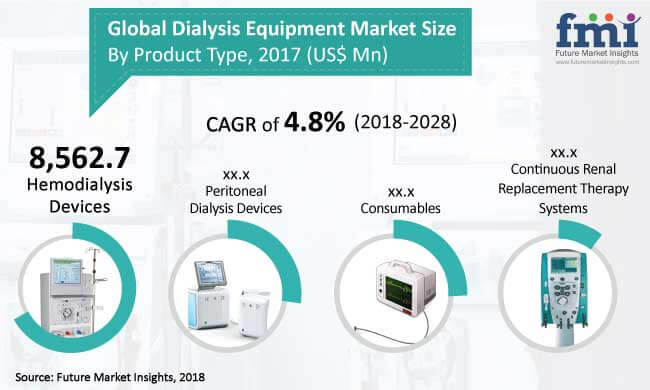
Patients with end-stage renal disease (ESRD) currently have two treatment options – kidney transplant and dialysis. The limited number of kidney donors worldwide and the various medical complications that arise from dialysis have pushed the medical fraternity to look for suitable alternatives to treat ESRD. Implantable bio artificial kidneys are the latest innovation in healthcare science that provide the health benefits of kidney transplantation and potentially wipe out the need for dialysis. Powered by silicon nanotechnology, artificial kidneys seek to eliminate the torture faced by dialysis patients and may prove to be a boon to patients with acute renal failure.
In a new development, the Kidney Research Institute of the University of Washington is currently developing a wearable artificial kidney that is expected to go into clinical trials in 2022. This could be a game changer in the medical devices sector, and may reduce the dependency on dialysis equipment to a great extent.
Dialysis Continues to Remain Dominant Therapy to Treat ESRD
While developments in the global healthcare sector continue to focus on innovative products and therapies, dialysis is currently the most administered treatment option for ESRD. Dialysis equipment is in great demand in hospitals, clinics, and dialysis centres across the world, boosting demand in the global market. According to a recent research study published by Future Market Insights, the global dialysis equipment market is projected to register a CAGR of 4.8% and will likely reach a valuation of US$ 23.6 Bn by 2028 end. The medical sector meanwhile continues to introduce newer dialysis equipment in the global market to address the varied needs of patients.
Portable Home Dialysis Equipment Trending the Global Market
Home dialysis has remained a preferred option for patients with renal disease as it is more convenient and less expensive than hospital based dialysis. Leading medical devices manufacturer Quanta has recently launched advanced haemodialysis equipment with an objective to improve the lives of patients requiring dialysis on a regular basis. This is an extremely flexible dialysis treatment that patients can take in the comfort of their homes. Quanta’s home dialysis equipment is portable, lightweight, and very easy to use. This dialysis equipment also incorporates advanced technology such as high-res screens with touchscreen functionalities and helps enhance patient outcomes.
Request Sample Report @ https://www.futuremarketinsights.com/reports/sample/rep-gb-711
Manufacturers of dialysis equipment are developing fully automatic, portable, and advanced dialysis equipment to treat patients of all ages suffering from ESRD. A notable technological advancement includes the introduction of high-efficiency and high-flux membranes, enabled by technical advances in membrane technology and polymer chemistry. Unlike traditional renal replacement machines, automated dialysis equipment facilitates the management of disease parameters digitally, thereby ensuring more accuracy and reducing costs of labour.
Wearable Dialysis Equipment to Ease Patient Discomfort; Expected to Rule the Global Market
With technology having proliferated every aspect of human lives, the innovation of wearable dialysis equipment is a blessing for countless dialysis patients, who can now break the shackles of confinement to fixed dialysis equipment and enjoy increased mobility. Wearable dialysis equipment is a miniature artificial HD machine based on dialysate regenerating sorbent technology. Designed for use as a belt, patients can wear this dialysis equipment for slow, gentle dialysis. This dialysis equipment is touted to best mimic the natural kidney function of blood cleansing. Given the continuous advancements taking place in medical device technology, wearable dialysis equipment may soon emerge in a more compact and small form factor to provide increased convenience and usability to patients.
Request to View TOC @ https://www.futuremarketinsights.com/askus/rep-gb-711
Miniature artificial kidneys could redefine the entire ecosystem of dialysis treatment. The integration of portable home haemodialysis equipment facilitating elongated use in homes and offices with wearable artificial kidneys for peritoneal dialysis allowing uninterrupted blood cleansing throughout the day will ensure more patient comfort and guarantee better and enhanced performance of the dialysis equipment.
The dialysis equipment market is expected to witness significant innovations in the coming years. Whether an upgrade to existing dialysis equipment or a viable alternative to dialysis itself, new-age dialysis equipment will promise increased mobility, less trauma, more peace of mind, and reduction in the burden of healthcare costs.
(Added: Fri Mar 08 2019 Hits: 1 Rating: 0.00 Votes: 0) Rate ItPages: [<<] ... 218 219 220 221 222 223 224 225 226 227 228 229 230 231 232 ... [>>]
Links SQL By: Gossamer Threads Inc.