
| |
|
| |
| Links: |
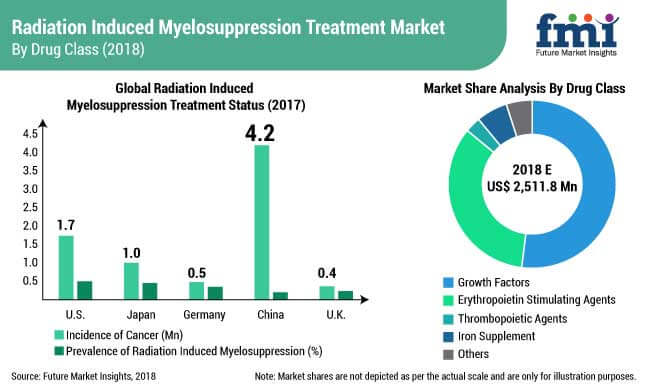
Rapidly improving healthcare infrastructure and reimbursement scenario has been a major booster for the healthcare industry in developing regional markets. With incessantly increasing number of cancer cases, it is more likely that the subsequent demand for a wide range of treatments adopted to treat cancer patients would also remain on a constant rise over the course of coming years.
Radiation therapy has been a significant part of cancer treatment and the consistently high success rate associated with radiotherapy is projected to further push demand for radiation-induced myelosuppression treatment worldwide.
A new market research study on global radiation-induced myelosuppression treatment forecasts steady growth for the market in the next few years. Future Market Insights projects a moderate, just-under 4% yearly growth outlook, in 2019 and ahead.
Nutropenia is foreseen to generate maximum demand for radiation-induced myelosuppression treatment, whereas injectables are identified to hold a substantial share in the total market value, based on the route of administration of radiation-induced myelosuppression treatment. Thrombocytopenia and anemia are likely to present lucrative opporunities for radiation-induced myelosuppression treatment providers.
Request Sample Report @ https://www.futuremarketinsights.com/reports/sample/rep-gb-8116
Report tracks key factors driving revenue growth of the market -
Increasing prevalence of cancers
Early diagnosis, promising improved chances of positive outcomes
Fostering R&D funds supporting cancer research
Strong product pipeline
Bolstering adoption of chemo-radiotherapy in cancer treatment
In the backdrop of patent expiry, a majority of market leaders are shifting their focus to the expansion of product pipeline of a wide range of innovative formulations, likely to shape the radiation-induced myelosuppression treatment landscape.
Myelo001 by Myelo Therapeutics GmbH recently received an FDA approval as an orphan drug to be used in the ARS (acute radiation syndrome) treatment.
Mylan NV and Pfizer Inc. also reveived FDA approvals for their recently launched biosimilars - Epogen and Neupogen, and Neulasta respectively.
Patent expiry of originator biologics formulations is creating investment opportunities in biosimilars production – for the operators in radiation-induced myelosuppression treatment landscape. As there is a considerable cost difference of around 20% between originator biologics and biosimilars, patients are inclined more towards an economical means of treatment, thereby fueling the scope of penetration of radiation-induced myelosuppression treatment in coming years.
Backed by a majority of established players housing strong bases across North America, especially the US, the report indicates a steady growth outlook for the radiation-induced myelosuppression treatment market in the region. North America will reportedly continue to account for over 65% share in the global market value.
New product launches currently mark the top developmental strategy adopted by leading companies competing in the radiation-induced myelosuppression treatment market. A majority of key players are also identified to focus on enhancing their geographical foothold in global radiation-induced myelosuppression treatment landscape. The report in a distinct section covers some of the key competitors operating in radiation-induced myelosuppression treatment marketplace, emphasizing their financial as well as strategic profiles in depth.
Request to View TOC @ https://www.futuremarketinsights.com/askus/rep-gb-8116
A few of the profiled companies include Pfizer Inc., Janssen Pharmaceutical NV, Janssen Global Services, LLC (Johnson & Johnson), Amgen Inc., Mylan NV, Teva Pharmaceutical Industries Ltd., Novartis AG, and Partner Therapeutics, Inc.
In the highly consolidated competitive landscape of global radiation-induced myelosuppression treatment, the three top ranking companies, i.e. Janssen Pharmaceutical NV, Amgen Inc., and Teva Pharmaceutical Industries Ltd. dominate in terms of market value. These players continue to hold winning revenue shares in the radiation-induced myelosuppression treatment owing to strong global presence and a considerable number of new drug approvals. Established companies are entering strategic partnerships and collaborations with regional leaders, in an effort to achieve better penetration into regional markets.
pop (Added: Fri Mar 15 2019 Hits: 134 Rating: 0.00 Votes: 0) Rate It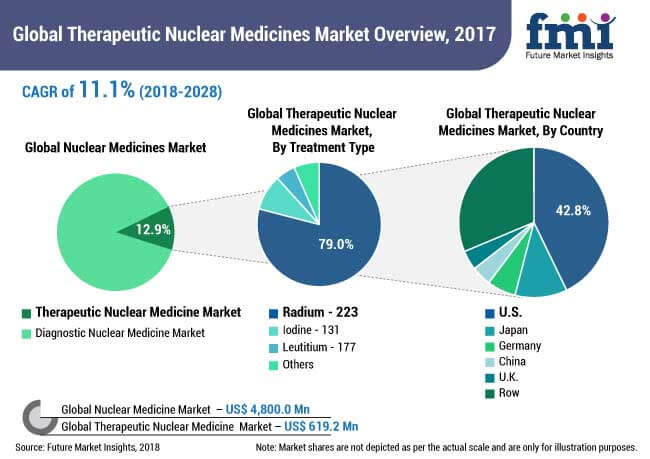
Increasing acceptance of therapeutic nuclear medicines (or radiopharmaceuticals) among industry experts will remain a prominent factor encouraging their adoption. Though associated with a negligible risk factor, radiopharmaceuticals are likely to witness growing recommendation owing to no proven significant adverse effects.
In the backdrop of the growing criticality of a more reliable, safer, and lesser harmful line of treatment for cancers, therapeutic nuclear medicines are being increasingly perceived as the potential treatment for cancer patients. Moreover, consistently surging instances of bone metastases further supports adoption growth, in the therapeutic nuclear medicines market.
Just-under 10% Annual Growth Projected for Radiopharmaceuticals Adoption
A recent market research intelligence by Future Market Insights focuses on the deep-dive evaluation of global therapeutic nuclear medicines landscape, emphasizing the analysis of the most influential factors responsible for surging acceptance of radiopharmaceuticals in treating a range of cancers and a few other chronic conditions.
The study projects robust progress for the global radiopharmaceuticals market in coming years, reportedly driven by remarkable adoption in the treatment of prostate cancer. In 2019, the global demand for therapeutic nuclear medicines is expected to grow at a 9.7% annual rate, and maximum adoption is estimated by cancer research institutes at a global level.
North America, jointly with Western Europe, represents more than 65% share of the total market value.
Outpacing developed regional markets, the radiopharmaceuticals market in China and emerging economies across Asia Pacific, Latin America, and Middle East & Africa are slated for higher year on year revenue growth of over 12% in 2019 and ahead.
China is reportedly the most lucrative market for penetration of therapeutic nuclear medicines, which is attributed to an expanding cancer patient pool in the country and a consistently surging rate of radiopharmaceuticals recommendation.
Request Sample Report @ https://www.futuremarketinsights.com/reports/sample/rep-gb-2930
Top Three Companies Account for More than 87% Market Value Share
A highly consolidated marketplace, global therapeutic nuclear medicines landscape is dominated by Bayer AG that currently accounts for just-under 80% revenue share in market. The top three players include GE Healthcare and Novartis AG other than Bayer, which collectively cover over 87% of the total valuation of radiopharmaceuticals market. While exceptional sales and success rate of Xofigo have been prominently retaining Bayer’s top position in the global market, strategic acquisitions are identified to be the key strategy behind Novartis’ success at a global level.
Thorough assessment of the competitive landscape of global therapeutic medicines market reveals a few prominent developmental strategies adopted by a majority of key companies operating in radiopharmaceuticals landscape –
Investments in R&D of targeted cancer therapeutics
Stronger supply chain and more streamlined distribution network
Improved flagship product sales
Strategic collaborations with pharma/biopharmaceutical companies
Contractual relationships with domestic/regional stakeholders
Strategic deals with internationally recognized cancer research institutes
Over 20% Growth Forecast for Erbium-169
Radium-223 has been the highest recommended type of radionucleotide in radiopharmaceuticals market. While it currently accounts for a whopping 78% share in the global market revenue, it is more likely that Erbium-169 that has been witnessing higher traction in recent past would witness relatively higher revenue growth in coming years. The report forecasts over 20% year on year revenue growth for Erbium-169 in 2019.
Request to View Methodology @ https://www.futuremarketinsights.com/askus/rep-gb-2930
Exceptional Growth Projections for Thyroid & Brain Cancer
While over half the global market value is accounted by the adoption of therapeutic nuclear medicines for treatment of prostate cancer, bone metastases also accounts for sizable revenue generation in the market. Brain tumor and thyroid cancer are likely to emerge highly lucrative targets for manufacturers of therapeutic nuclear medicines, according to the report.
(Added: Thu Mar 14 2019 Hits: 19 Rating: 0.00 Votes: 0) Rate It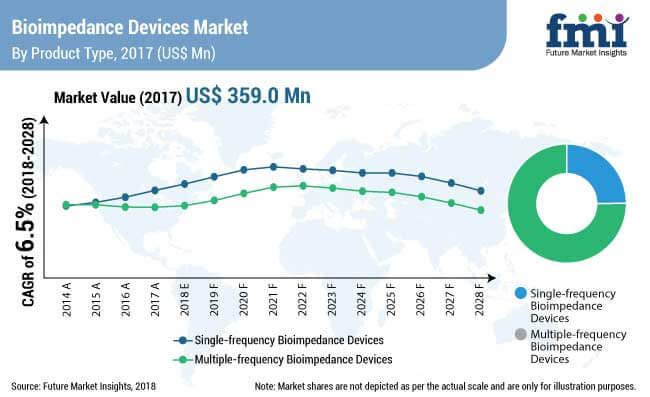
Multiple-Frequency Bioimpedance Devices to Witness Increasing Adoption Through 2028
Increasing cases of CKD diseases are expected to contribute to the growth of the Bioimpedance devices market throughout the forecast period. Chronic kidney disease (CKD) is a medical condition that can be characterized by gradual loss of kidney function over time. As per the National Kidney Foundation, Inc., 30 million American adults have Chronic Kidney Disease and millions of others are at high risk of developing CKD. The Glomerular filtration rate (GFR) is the best overall index for studying kidney function. Bioelectrical impedance or Bioimpedance is used for improved estimation of glomerular filtration rate in non-diabetic patients with chronic kidney disease and also to estimate muscle mass. Bioelectrical impedance analysis (BIA) can also be used to measure appendicular lean mass (ALM). The performance of these equations that include ALM BIA to estimate renal inulin clearance (GFR INU) can be compared with demographic variables and further used for modifications in diet for renal disease (MDRD) treatment.
Widespread online marketing channels have tremendously increased the sale of portable as well as hand-held Bioimpedance devices in recent years. For Instance, a research study estimated that in 2015, approximately 70% of the population in the U.S. depended on online shopping portals for buying different items. Vendors operating in the Bioimpedance devices market are focusing on promotional strategies and online marketing to ensure better access to their devices and increase sales. Devices offered online also help vendors cut on operational and distribution costs. The online marketing channel also allows vendors to offer information about devices in their portfolio and gain access to both global and local markets. In addition, these online marketing websites provide a broad selection of high-quality Bioimpedance systems at more affordable costs.
Request Sample Report @ https://www.futuremarketinsights.com/reports/sample/rep-gb-5563
Majority of the manufacturers in the Bioimpedance Devices makers are focusing on developing products that are portable and affordable. The popularity of portable Bioimpedance devices is increasing due to its various advantages. For instance, Bioimpedance Devices are noninvasive, reasonable, safe and easy to operate. These devices are light in weight and thus, are extensively used in home-based healthcare settings for monitoring health of the entire family. All these factors, cumulatively, are expected to drive the demand for portable Bioimpedance devices during the forecast period. Portable/ Hand-held Bioimpedance devices are also tremendously being opted by people for traveling purposes. For instance, the demand for ImpediMed SFB7, which is a hand-held Bioimpedance device, is increasing as this device is easy to carry. Technological advancements to enhance the quality of Bioimpedance devices and increase patient compliance are also projected to drive the growth of the market over the forecast period.
Multiple-frequency Bioimpedance Devices are highly preferred because these devices can measure impedances in various frequencies. This provides a better and efficient estimation of fat free mass, total body water and intra and extra cellular water. Single frequency Bioimpedance devices can calculate fat free mass and total body water but these devices are not capable of estimating intra and extra cellular body water. Increasing popularity and growing awareness about multiple-frequency Bioimpedance devices is expected to boost market growth for Bioimpedance devices over the forecast period.
Request to View TOC @ https://www.futuremarketinsights.com/askus/rep-gb-5563
FMI has segmented the global Bioimpedance Devices market by product type, modality and end user. The Bioimpedance Devices market, by product type, is segmented into Single-frequency Bioimpedance Devices and Multiple-frequency Bioimpedance Devices. By Modality, the Bioimpedance devices market is segmented into Wired Bioimpedance Devices and Wireless Bioimpedance Devices. Bioimpedance Devices, by end users, are segmented into Hospitals, Specialty Clinics, Rehabilitation Centers and Others. Region-wise segmentation includes North America, Latin America, Eastern Europe, Western Europe, Asia-Pacific excluding Japan, Japan and Middle East & Africa. The wired Bioimpedance devices segment in the Bioimpedance Devices market is expected to witness a significant growth during the forecast period.
The report tracks some of the key companies operating in the Bioimpedance Devices market, including General Electric Company, Omron Corporation, Fresenius Medical Care, ImpediMed Limited, SELVAS AI Inc., Tanita Corporation, RJL Systems, Inc., Maltron International Ltd., Bodystat Limited and SMT Medical GmbH.
(Added: Thu Mar 14 2019 Hits: 1 Rating: 0.00 Votes: 0) Rate ItPages: [<<] ... 213 214 215 216 217 218 219 220 221 222 223 224 225 226 227 ... [>>]
Links SQL By: Gossamer Threads Inc.