
| |
|
| |
| Links: |
Around 3/4th share of the total revenue of endoscopy visualization systems landscape is accounted by Tier 1 players that are prominently focusing on cost effective product development
Leaders in endoscopy visualization systems landscape are also prioritizing innovative product launches, product portfolio extension, and strategic collaborations and mergers for an even stronger market footprint.
Tier 2 and Tier 3 companies, making up for the rest of market revenue, are particularly focusing on regional expansion – especially targeting developing Asian economies.
Prominently due to the paradigm shift to value based, sophisticated healthcare system and a mounting number of strategic mergers and acquisitions between leading medical device manufacturers, endoscopy visualization systems have been witnessing robust demand in recent years.
“With an ever growing demand for minimally invasive surgical procedures and growing availability of low-cost diagnostic procedures, we expect robust expansion of the global revenue through endoscopy visualization systems. While endoscopy visualization systems currently account for a billion dollar market globally, it is more likely that the endoscopy visualization systems landscape will observe over 7% year on year growth in 2019. Relatively undemanding FDA clearance guidelines is another strong factor pushing the prospects for endoscopy visualization systems in the near future,” says a senior research analyst at Future Market Insights.
Request Sample Report@ https://www.futuremarketinsights.com/reports/sample/rep-gb-7596
Innovation of Endoscopy Visualization Systems Takes a Grand Leap beyond 3D Imaging
The 3D endoscope visualization system has been an impactful innovation in the endoscope visualization systems landscape. While 3D visualization technology offers a deeper view of the diagnostic area during endoscopic procedures, constant R&D efforts have directed the innovations to the latest - customized 3D visualization. The world's first-ever endoscopy visualization system (by MedicalTek) has been recently launched that works on an easy-to-set and easy-to-alter imaging technique and offers an adjustable 3D perception to resultant endoscopic images.
Product Type Assessment: Adapting to the Trend of Minimally Invasive Surgery Demand, High-range Endoscopy Visualization Systems Remain the Top Seller
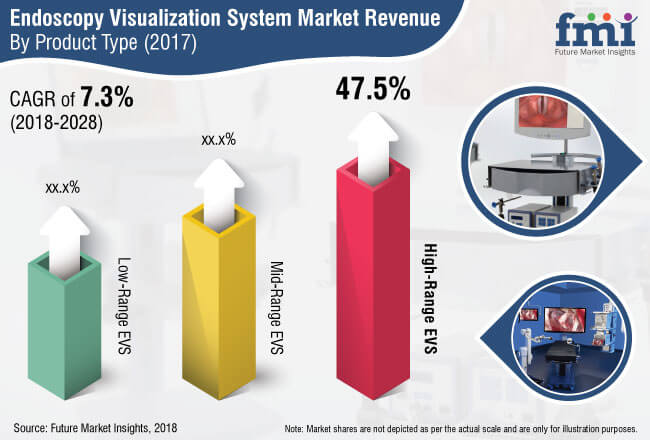
The FMI analyst explains that ever-growing demand for minimally invasive surgical procedures worldwide, it is quite clear that high-range endoscopy visualization systems will continue to bring in maximum revenue to the marketplace. With a current market value share of around 50%, high-range endoscopy visualization systems will be the highest selling type of EVS owing to favorable reimbursement policies and availability of advanced technology systems in this segment. Mid-range endoscopy visualization systems are also identified to capture a considerable market value share in 2019, demonstrating the year-on-year expansion of over 7%.
Diagnostic Area-wise Analysis: Maximum Opportunities Exist for GI Tract Endoscopy Visualization Systems
Recent statistical data published by American Society of Gastrointestinal Endoscopy (ASGE) indicates that among roughly 75 million endoscopic procedures annually performed at a global level, more than 65% are performed on the gastrointestinal tract, followed by the female reproductive tract. A considerable number of endoscopies are also performed through a small-sized incision with an objective to achieve least invasion. According to FMI’s projection for 2019, the year on year revenue growth will be around 7% in case of gastrointestinal tract endoscopy visualization systems, whereas that in case of small-sized incision procedures will be more than 7%.
Regional Outlook: Asia Pacific Becomes an Attractive Growth Platform for Manufacturers of Endoscopy Visualization Systems
While developing economies are constructing a lucrative base for the growth of endoscopy visualization systems landscape through changing demographics and an expanding patient pool, Future Market Insights offers exclusive insights on the same. An elevating number of endoscopy visualization systems predominantly for disorders of GI tract, female reproductive system, urinary tract, and respiratory system is encouraging the sales of endoscopy visualization systems in emerging Asian economies.
Request to View TOC @ https://www.futuremarketinsights.com/askus/rep-gb-7596
The FMI analyst says while unfolding the key attributes driving expansion of market within emerging regional territories, “While APEJ is at present the second largest market for endoscopy visualization systems after North America, Japan is also witnessing significant growth. This growth can be attributed to both, a healthy rate adoption of endoscopy visualization systems at hospitals, and impressively growing sales at specialty clinics”.
pop (Added: Wed Mar 20 2019 Hits: 121 Rating: 0.00 Votes: 0) Rate It 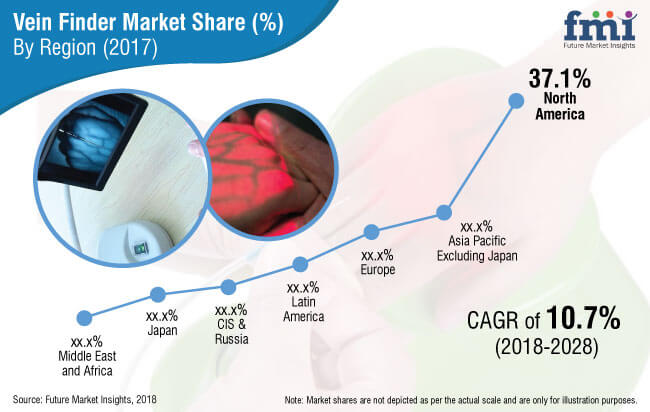
Advancements in healthcare technology have fuelled a spate of innovations in medical devices, with top-of-the-line product launches presenting enhanced device functionalities. Innovations in vein finder technology are taking the medical devices sector by storm, with advanced vein finders backed by latest technologies acting as a boon for physicians, nurses, and phlebotomists. The last two years have witnessed notable innovations in vein finder technology, the prominent ones being:
The world’s first slide style palm vein authentication technology was introduced in the vein finder market by Fujitsu Laboratories Ltd. in 2017. This compact technology is capable of being integrated into tablets and benchtop mobile devices.
In 2018, Vino Optics launched the Oxy-Iso Paramedic vein glasses, a pair of sunglasses to help physicians and phlebotomists easily locate veins through enhanced image display by filtering ultraviolet rays. This technology is supposedly beneficial for healthcare professionals suffering from colour blindness, as these vein finders help physicians locate veins by enhancing their ability to view reds and greens.
Request Sample Report@ https://www.futuremarketinsights.com/reports/sample/rep-gb-7640
“Innovations like these are expected to increase adoption of advanced vein finders in hospitals and healthcare establishments, leading to significant revenue growth of the global vein finder market. Our analysis of the performance of the vein finder market reveals an absolute $ opportunity of US$ 3.0 Mn between 2018 and 2019 and the global market is estimated to register a stellar growth rate of 10.7% in the coming decade.” --- Practice Head – Healthcare & Medical Devices, Future Market Insights
Vein Finder Market Structure Overview: Regional Focus to Bolster Global Market Growth
An overview of the market structure of the global vein finder market reveals a strong regional presence of top market companies as well as local players. Leading companies operating in the global vein finder market are leveraging acquisitions as a primary strategy to facilitate regional market expansion. Future Market Insights analysis also observes a strong focus by vein finder companies on R&D for new product development and expansion of the existing product line in key regional growth markets.
“Implementation of inorganic growth strategies is seen as the way forward to penetrate key growth markets across certain developing regions. Companies in the vein finder market with diversified product offerings are collaborating with local regional players to introduce low-cost vein finder products in order to cement their presence across top regional markets.”
In 2017, the leading three companies in the global vein finder market held a revenue share of about 56% while the remaining players contributed about 44% market share. New product development is a key strategy adopted by players in the global vein finder market to increase their brand value. Rising difficulties associated with peripheral venous access and venepuncture is one of the primary factors boosting growth of the vein finder market and key players are capitalizing on the growth drivers to increase their market share.
Future Market Insights predicts lucrative revenue growth in the various regional markets of Europe and Asia Pacific Excluding Japan. Europe will likely remain the top market for sales of vein finder devices owing to increasing adoption of vein finder across hospitals and clinics to locate veins for drawing blood samples, IV insertions, and other vascular procedures.
Request to View TOC @ https://www.futuremarketinsights.com/askus/rep-gb-7640
Portable Vein Finder to Garner Maximum End User Demand; Infrared Technology to Register Fastest Growth in Revenue, Reveals Future Market Insights
Portable vein finders are likely to be the most preferred product type in the global vein finder market, registering impressive demand as well as sales growth in the coming decade. The convenience and ease of use offered by portable vein finders is the primary factor boosting adoption across hospitals, clinics, and other healthcare institutions. The global vein finder market is fuelled by advanced technology with infrared technology being the most adopted in vein finders. Among the various end users of vein finders, hospitals are likely to exhibit the highest demand in the next 10 years, also contributing to maximum revenues in the global vein finder market.
(Added: Tue Mar 19 2019 Hits: 13 Rating: 0.00 Votes: 0) Rate It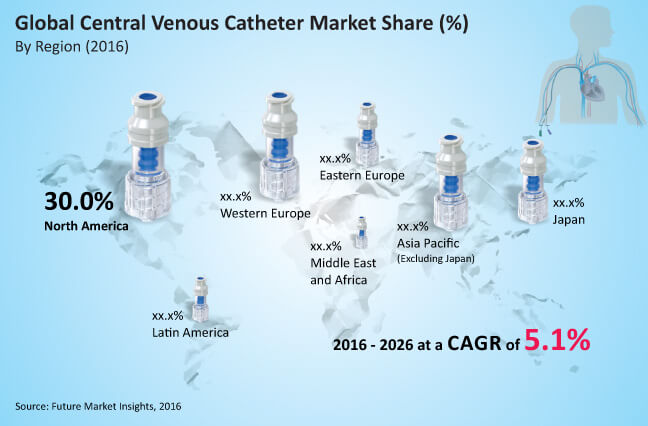
Need for minimal invasive surgeries have been increasing since few years as it reduces the possibilities of postoperative complications. This has led to increasing production sales of central venous catheters across the global market. Rapid increase in the number of cancer patients are likely to drive the production sales of central venous catheters for the purpose of completing chemo processes, which the treatment for cancer much easier. Geriatric population are likely to experience more chronic health conditions, especially chronic kidney diseases, thereby fuelling demand and supply of CVCs. Apart from this, increasing rate of hospitalization and drug administration in the outpatient settings where the patient is in need of IV therapy, stimulates the growth of central venous catheter market.
The National Center for Biotechnology Information is of the point of view that data assessment strategies and quality indicators for the purpose of preventing bloodstream infections with central venous catheter has been developed. Launch of sterile and disposable catheters has unlocked significant growth opportunities for market for central venous catheters as it helps in preventing infections while using catheter Leading players such as AngioDynamics, Inc. has enhanced its Oncology business with the addition of BioScentry technology. This step has been taken as a thoughtful and strategic acquisition, which would help the company in delivering economically favorable, clinically relevant and deliver safer solutions for the improvement of patient outcomes.
Request Sample Report @ https://www.futuremarketinsights.com/reports/sample/rep-gb-949
A recent study by Future Market Insights envisages that market for central venous catheter has been anticipated to expand at a steady 5.1% CAGR during 2016 to 2026. Inadequate quality check and high-costs with regards to catheters are key challenges limiting growth of market for central venous catheters, especially in the developing regions such as Middle East, Asia-Pacific and Africa. Non-tunneled central venous catheters is likely to hold the lion’s share in market for central venous catheters as it has been highly beneficial during emergency situations for blood withdrawal purposes. Hospitals contribute towards the maximum usage of central venous catheters owing to increased number of surgical care and quality facilities to its patients.
Polyurethanes are now being preferred over silicon for the production of central venous catheters, in light of the material’s relative compatibility and softness. However, multi-lumen catheters have taken the lead in terms of design, as it helps in reducing the frequency of catheter insertion, thereby enabling multiple drugs to get inserted with a single catheter.
North America is likely to dominate market for central venous catheters during the forecast period. The report says that central venous catheter market in the U.S. is the most profitable market in North America as the region has been witnessing increasing number of FDA approvals for the antimicrobial coated catheters. Asia-Pacific will display significant growth opportunities for market for central venous catheters in the forthcoming years on account of rising number of specialized clinics and hospitals in China and India. Rapidly increasing need for innovative medical technologies is expected to strengthen its position as healthcare hub in APEJ.
Request to View Methodology @ https://www.futuremarketinsights.com/askus/rep-gb-949
Key players and manufacturers in market for central venous catheters have been taking immense efforts in product launches with regards to antimicrobial coated catheters, due to increasing cases of infections thereby stimulating the production sales of the product across the globe. The U.S. FDA (Food and Drug Administration) has approved the antimicrobial coated central venous catheters for preventing bloodstream infections related to catheter.
Latest technological innovations have resulted in the interventional surgeons, anesthesiologists and radiologists having access to the technologically improved central venous catheters. As a consequence, tip location devices, which helps in accurate and precise location of the catheter’s tip, are gaining increased momentum.. In addition, there have been innovations such as new catheter material compositions, which helps in improving user’s post and pre-catheterization. Antimicrobial coatings, which help in preventing infections and biocompatible materials such as polymer and silicone mixes that are substituting latex materials, are also witnessing high demand in order to reduce the intensity of pain during administration.
(Added: Tue Mar 19 2019 Hits: 1 Rating: 0.00 Votes: 0) Rate It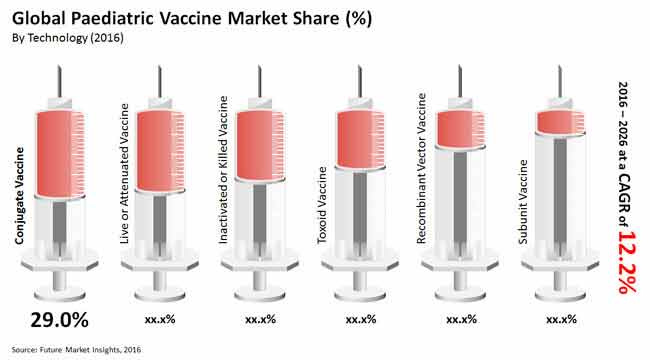
According to a new report published by Future Market Insights titled “Paediatric Vaccine Market: Global Industry Analysis & Opportunity Assessment, 2016 – 2026”, in terms of revenue, the global paediatric vaccine market is expected to increase at 12.2% CAGR during the forecast period 2016-2026. The global paediatric vaccine market is expected to reach US$ 27.97 Bn in 2016.
Paediatric vaccine market is a billion dollar market accounting for a substantial proportion of healthcare expenditure in the recent times. The paediatric vaccine market is segmented according to indication, technology and vaccine type. According to the indication, the paediatric vaccine market is sub segmented into pneumococcal, DTP, rotavirus, influenza, meningococcal, hepatitis B, Hib, MMR and polio. According to technology the market is further segmented into live or attenuated, inactivated or killed, toxoid, conjugate, subunit and recombinant vaccines. By vaccine type, the global paediatric vaccine market is segmented into monovalent and multivalent vaccines.
A slew of routine immunisation initiatives rolled out by the government and private agencies has broadened the market for the paediatric vaccines. A new wave of funds pumped into the market by different government and private players to cork the rise of the child deaths across the globe has also opened a new window of opportunity for the paediatric vaccine market. As per the report of WHO (World Health Organization), the global spending on immunisation soared from US$21.4 to US$26.9 per infant in 2014. The massive economic boom in some regions of the world is expediting the growth of the paediatric vaccine market.
Request Sample Report @ https://www.futuremarketinsights.com/reports/sample/rep-gb-1317
Segmentation analysis
By indication, pneumococcal segment accounted for higher revenue share in global paediatric vaccines as compared to other product segments. The pneumococcal segment is expected to reach a value of US$ 31.58 Bn by 2026, reflecting a CAGR of 14.4% over the forecast period. The growth of pneumococcal segment is attributed to the increasing incidence of infectious diseases.
In terms of revenue, Hib vaccine segment is the second most growing segment and is expected to reach a value of US$ 13.49 Bn by 2026, growing at a CAGR of 13.4%. Hepatitis B and meningococcal segment are expected to show double-digit CAGR growth in the forecast period contributing to the growth of global paediatric vaccine market.
By technology, conjugate segment accounted for highest revenue share in global paediatric vaccine market as compared to live or attenuated segment. The conjugate segment is expected to reach a value of US$ 32.09 Bn by 2026, reflecting a CAGR of 14.8% over the forecast period. This is expected to be closely followed by the growth of pneumococcal and meningococcal vaccines in this segment
By end user, institutional health centres account for higher demand for paediatric vaccine as compared to other end user segments such as hospital pharmacies and retail pharmacies. The strong growth in institutional health centres can be attributed to increasing government interventions in immunisation programs in order to improve vaccine coverage. Institutional health centres are expected to register highest CAGR of 13.8% over the forecast period.
Regional analysis
By region, North America is dominating the global paediatric vaccine market due to improved healthcare infrastructure in this region. The North America paediatric vaccine market is expected to be valued at US$ 20.15 Bn by 2026 growing at a CAGR for 11.0%. In addition to North America, demand for paediatric vaccines has been significantly growing in Western Europe and APEJ. APEJ is expected to grow at a CAGR for 14.9% over the forecast period and is expected to dominate the market by 2026 by generating revenue of US$ 22.69 Bn and revenues in Western Europe are anticipated to grow by 11.2%. Middle East and Africa is expected to grow at a CAGR of 12.6% and this growth is anticipated by growth government intervention for immunisation by carrying out national level immunisation campaigns and also disease specific immunisation campaigns.
Request to View Methodology @ https://www.futuremarketinsights.com/askus/rep-gb-1317
Vendor insights
Key players in the global paediatric vaccine market include Indian Immunologicals, GlaaxoSmithKline Plc., Pfizer Inc., Sanofi, Merck & Co. Inc., Panacea Biotec, Zydus Cadila, Emergent BioSolutions Inc., Serum Institute of India Pvt. Ltd., and Bharat Biotech. The growth of paediatric vaccine market is attributed to the development in the research by key players in the field, for instance, in February 2016, GSK submitted US regulatory submission for expanding the indication of FLuLaval Quadrivalent, influenza vaccine, for infants more than 6 months. These developments will boost the growth of the global paediatric vaccine market.
(Added: Tue Mar 19 2019 Hits: 3 Rating: 0.00 Votes: 0) Rate It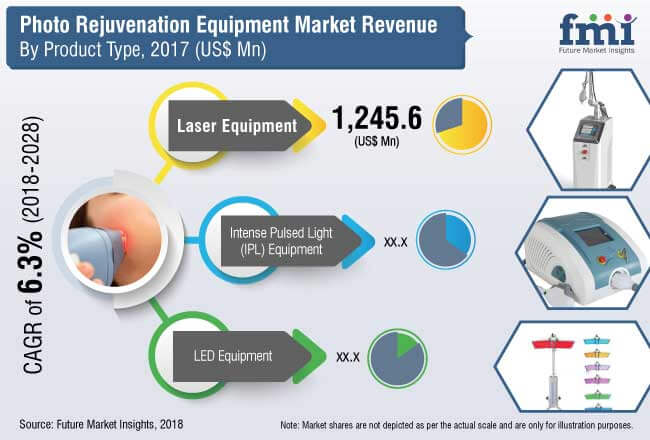
Advancements in laser technologies over the years have contributed to various applications of cosmetic treatments, contributing to the growth of the global photorejuvenation equipment market. Rising technological advancements with an increasing number of skin problem are anticipated to increase the adoption of photorejuvenation equipment globally. According to the latest research by the company, the global photorejuvenation equipment market is anticipated to account for over US$ 3,100 Mn, in terms of value, by 2028 end. The report on photorejuvenation equipment is expected to show significant growth potential with an average Y-o-Y growth rate pegged at 6.3% through 2028.
Global Photorejuvenation Equipment Market: Overview & Analysis
Rising incidence of skin problems leads to scarring. Acne causes major physical changes which include permanent scarring. Furthermore, nearly 85% of people aged between 12 and 24 experience acne. The commonly used non-invasive treatment for acne scarring is laser resurfacing. The effectiveness of photorejuvenation equipment are widely accepted in dermatology for the treatment of a variety of cutaneous conditions. Thus, the rising prevalence of such skin problems is triggering the growth of the global photorejuvenation equipment market over the forecast period.
A Sample Of This Report Is Available Upon Request @ https://www.futuremarketinsights.com/reports/sample/rep-gb-7559
Manufacturers are adopting strategic approaches in order to increase the product reach in the photorejuvenation equipment market. Increasing demand of photorejuvenation equipment for non-invasive photorejuvenation treatments, with frequent product approvals and advancements in photorejuvenation equipment technology, are further boosting the strategic activities like mergers and collaboration agreements among manufacturers and driving the photorejuvenation equipment market growth. Companies operating in the photorejuvenation equipment market are also continuously focusing on increasing the photorejuvenation equipment reach globally. As a result, they are adopting distribution agreements as an expansion strategy to gain maximum revenue share in the global photorejuvenation equipment market. Furthermore, advancements in laser technologies over the years have contributed to various applications of cosmetic treatments, contributing to the growth of the global photorejuvenation equipment market.
Increasing healthcare spending is an indicator of improvement in the healthcare setting as a whole. Increase in the budget of hospitals would indicate the use of better quality equipment's and thus drive the growth of the global photorejuvenation equipment market. According to the IMF, healthcare spending is expected to increase by over 6% yearly, based on the current GDP forecast.
However, high treatment cost and adverse side effects related to the photorejuvenation equipment may hamper the growth of the global photorejuvenation equipment market. Treatment with photorejuvenation equipment, including surgeries and non-invasive treatments, are associated with high costs making them inaccessible to people in the low middle-income groups. Also, non-invasive treatments with photorejuvenation equipment require a series of sessions to achieve the desired result, which results in a high overall cost of the treatment. Furthermore, the duration of treatment, number of sessions and the cost of treatment depend on the area being treated. These factors are directly responsible for dropping the growth of the global photorejuvenation equipment market.
According to the company, the laser equipment segment accounted for over 75% revenue share in the overall photorejuvenation equipment market in 2017. However, the growing popularity of LED and IPL might limit the segment’s growth in the near future. China photorejuvenation equipment market is expected to be the most lucrative market in the global photorejuvenation equipment market during the forecast period.
The company has segmented the global photorejuvenation equipment market into Intense Pulsed Light (IPL) Equipment, Laser Equipment, and LED Equipment. In terms of revenue, the laser equipment segment in photorejuvenation equipment will hold maximum revenue share over the forecast period.
Read Comprehensive Overview with Methodology of Report @ https://www.futuremarketinsights.com/askus/rep-gb-7559
The company’s report tracks some of the key companies operating in the photorejuvenation equipment market, such as Hologic Inc. (Cynosure, Inc.), Lumenis, Syneron Medical Ltd., Lynton Lasers Ltd, EL.EN. S.p.A. (Deka Mela S.r.l.), Fotona, Cutera, Inc., Lutronic Corporation, Beijing Nubway S & T Co., Ltd, and others.
(Added: Tue Mar 19 2019 Hits: 2 Rating: 0.00 Votes: 0) Rate It
Pages: [<<] ... 211 212 213 214 215 216 217 218 219 220 221 222 223 224 225 ... [>>]
Links SQL By: Gossamer Threads Inc.