
| |
|
| |
| Links: |
Mucus Clearance Devices Market: Key Research Findings
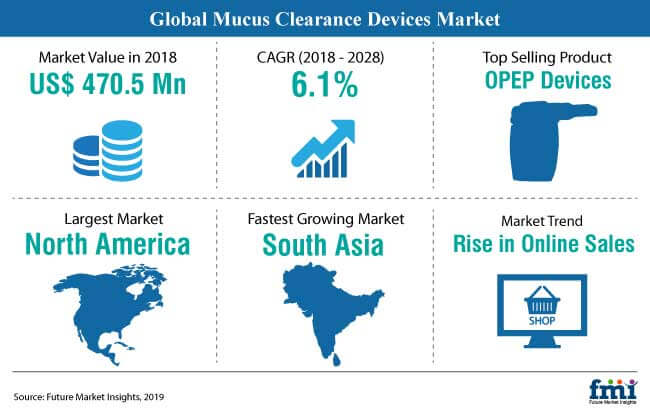
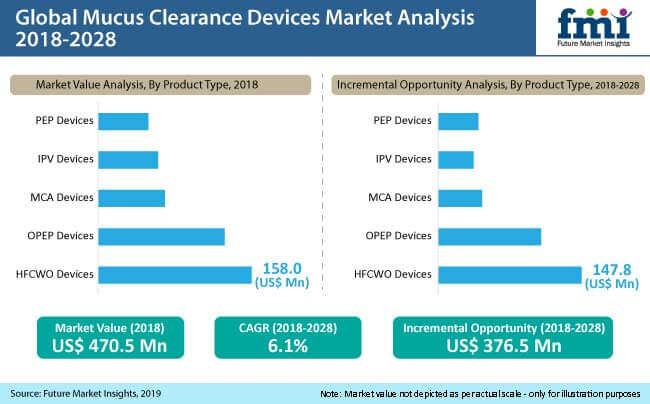
Global mucus clearance devices market size in 2018 - Nearly US$ 470
The mucus clearance devices market revenue is estimated to grow with a CAGR of 6.1% over the forecast period of 2018-2028
On the basis of product type, the HFCWO devices segment of the mucus clearance devices market accounted for a 33.6% share in 2018, which is expected to increase to 36.1% by the end of 2028. This segment of the mucus clearance devices market is also expected to grow at a higher CAGR as compared to other product types
The North America mucus clearance devices market is expected to gain the maximum value share of 41.2% in 2018. However, the South Asia mucus clearance devices market is expected to grow at a maximum CAGR of 10.3% from 2018 to 2028
The US represents the most lucrative market in the North America mucus clearance devices market, followed by Europe and East Asia. South Asia is the fastest growing mucus clearance devices market owing to the rapid adoption of mucus clearance devices in India and China
However, the mucus clearance devices market in MEA is expected to record sluggish growth due to low awareness among healthcare professionals and patients
Request Sample Report @ https://www.futuremarketinsights.com/reports/sample/rep-gb-9416
Key players are focusing on strengthening their positions by collaborating with local manufacturers and acquisitions to enhance their sales. Moreover, companies are targeting the North America, Asia Pacific, and Europe regions through the adoption of the globalization strategy
Top 3 Factors Impacting the Growth of the Mucus Clearance Devices Market
Growing Popularity of PEP & OPEP Devices
Mucus clearance devices are considered medically necessary for the treatment of COPD, cystic fibrosis, bronchiectasis, and asthma. Increase in the number of requests about traveling with PEP machines internationally is boosting the global mucus clearance devices market. PEP is the standard therapy that is required, and it offers substantial health benefits when it is used as prescribed.
Moreover, the launch of few mucus clearance devices, such as Aerobika, The Lung Flute, Flutter, Acapella, and others, has propelled the mucus clearance devices market. This has ultimately increased the popularity of PEP and OPEP devices, which is another factor that is expected to drive the revenue growth of the mucus clearance devices market over the forecast period.
Increasing Focus of Companies toward Homecare Settings
The providers of mucus clearance devices are primarily focusing on providing full service, which is likely to provide comprehensive information about a variety of respiratory disorders. Companies are more focused on maintaining a patient-centric culture. New products foster patient engagement with PEP, OPEP, and HFCWO therapy, which helps improve adherence to the prescribed treatment and better patient outcomes in homecare settings and clinics.
The increasing usage of mucus clearance devices in home settings, technological assessments, changing healthcare guidelines, and the requirements of insurance payers are among the factors expected to significantly change the role of physicians, payers, and patients. Therefore, the increasing adoption of mucus clearance devices in homecare settings is expected to propel the mucus clearance devices market over the forecast period.
Rising Patient Pool Suffering from COPD
The Journal of Thoracic Disease reveals that approximately 3-4% of the population of China is suffering from COPD owing to high exposure to biomass smoke. A Study by WHO highlights that approximately 65 Mn people around the globe are suffering from COPD.
The same study also estimates that this prevalence is expected to double by 2050. Furthermore, this study explains that high-income countries have greater prevalence owing to rising pollution. This factor is projected to drive the mucus clearance devices market.
Request to View TOC @ https://www.futuremarketinsights.com/askus/rep-gb-9416
Mucus Clearance Devices Market: Competitive Analysis
The global mucus clearance devices market is highly consolidated, and the top five-six players are estimated to account for a market share of approximately 85%
Hill-Rom Inc. accounted for a share of 35.3% of the global market in 2017 due to its focus on expansion in the emerging economies
Allergan, Philips, Respiratory Technologies, Smiths Medical, and Electromed Inc. collectively accounted for a 49.3% share of the global mucus clearance devices market owing to the focus of these companies on key countries such as Brazil, India, Russia, China, and Mexico
Other regional and local players, such as Westmed, Inc., International Biophysics Corp., Thayer Medical, and VORTRAN Medical, are estimated to gain the remaining revenue share of the mucus clearance devices market in 2017
Neurovascular Guidewires Market - Key Research Findings
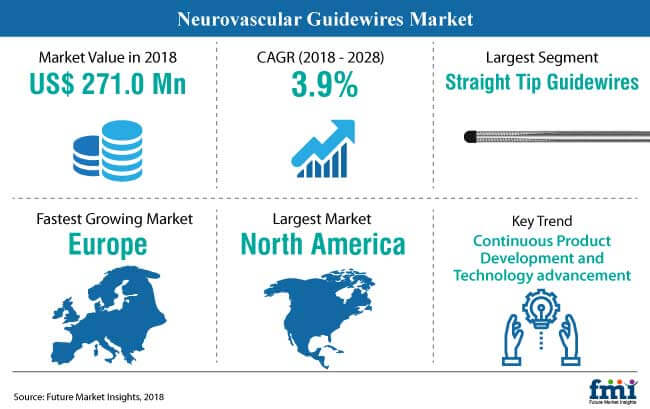
Global neurovascular guidewires market size in 2018 – Nearly US$ 262 Mn
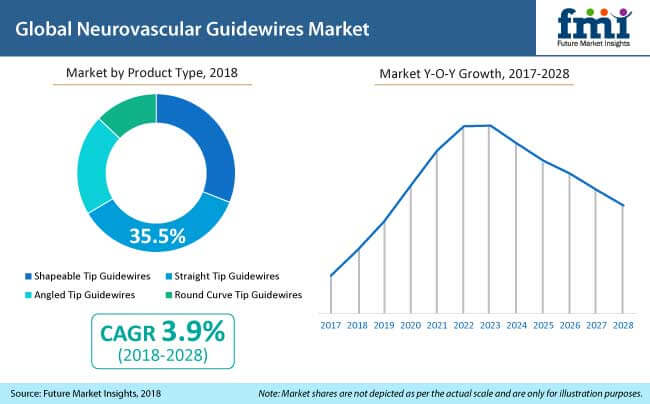
Neurovascular guidewires market is projected to record a CAGR of 3.9% during the forecast period (2018–2028).
According to the Centers for Disease Control and Prevention (CDC),
The prevalence of ischemic strokes (2016) was approximately 87% in the US alone.
North America and Europe will remain the largest regional markets for neurovascular guidewires.
The rising number of minimally invasive surgeries & neurovascular neuroradiology procedures, advancements in technology, the adoption of new equipment, and the rising prevalence of neurovascular diseases are among the key factors that are likely to assist growth of the neurovascular guidewires market.
East Asia holds a high growth potential for the neurovascular guidewires market, as the demand for new treatment options is rapidly increasing, driven by the rising burden of aneurysm and neurovascular diseases in the region.
Straight tip guidewires are likely to witness maximum growth rate in the neurovascular guidewires market through 2028.
The nature of micro-sensors and fiber optics, ease of operability, and high accuracy in neurovascular intervention procedures have resulted ain extensive usage of laser straight tip guidewires.
Rising number of minimally invasive surgeries and neurovascular neuroradiology procedures
According to the Centers for Disease Control and Prevention, about 87% of all strokes are ischemic strokes and around 10% of these strokes result in death within a period of one month. According to the American Stroke Association, the annual stroke prevalence in the US reach around 800,000 – resulting in approximately 130,000 deaths, every year.
The World Health Organization claims that one death by stroke occurs every 10 seconds around the world. The rising prevalence of neurovascular diseases, especially strokes & cerebral infarctions, and the requirement of surgical procedures, are expected to drive the neurovascular guidewire market.
More than 50 million surgical procedures were performed in the US in 2016 and every year, the number of surgical procedures is growing. Moreover, the preference for minimally invasive surgeries is increasing. Neurovascular guidewires are used in various minimally invasive surgeries because of their specifications such as their thinness and flexibility, which enables them to be easily inserted into the body to guide larger equipment or instruments such as feeding tubes, catheters, and others. Improvements in surgical procedures and the increasing demand for minimally invasive surgeries is boosting the usage of neurovascular guidewires during minimally invasive interventional procedures.
Rising prevalence of neurovascular diseases is likely to boost the neurovascular guidewires market
At present, around 87% of the people worldwide are suffering from stroke, according to the Centers for Disease Control and Prevention. The incidence of ischemic stroke is predicted to increase, especially in the lower to middle-income or underdeveloped countries, according to the World Bank Group. Micro-sensors and fiber optic guidewires improve the results of several surgical procedures, thus broadening the utilization of guidewires from neurovascular diseases to coronary & urological diseases.
Positive outcomes of clinical trials are expected to contribute to the expansion of neurovascular guidewires market
Clinical trials have demonstrated the benefits of guidewires such as lubricious coating, sterility, and biocompatibility, efficacy in the treatment procedure of aneurysm, cerebral infarction, and ischemic stroke, which is another factor estimated to the boost the neurovascular guidewires market.
The ongoing studies of new technologies to improve the quality of treatment with the help of neuro-intervention procedures, such as a gold coil at the tip for radio capacity and a distal tip that is specially engineered for neuro-intervention procedures, are expected to support the growth of neurovascular guidewires market.
Request to View TOC @ https://www.futuremarketinsights.com/askus/rep-gb-3121
Increasing number of neurovascular neuroradiology procedures and technological advancements
The increasing number of neurovascular neuroradiology procedures is boosting the demand for access products, which is driving the usage of guidewires. Aneurysm and AVM procedures require 1.7 to 1.8 cm guidewire per procedure, and new technology innovations for the treatment of ischaemic stroke, such as stents, are driving the adoption of neurovascular guidewires. Neurovascular guidewires improve the distal navigation and trackability features of the guidewires that are used in various complex neurovascular intervention procedures.
Significant advancements have been witnessed in guidewire technology, which have resulted in the initial success rates, as well as decreased the difficulties pertaining to the usage of guidewires. Developments in guidewire technology as well as in their framework have resulted in enhanced the efficacy and safety of movable wire systems.
Neurovascular Guidewires Market Structure Analysis
Tier 1 companies are focusing on strategic mergers, acquisitions, and collaborative agreements in an effort to strengthen sales and distribution networks.
Asahi Intecc Co., Ltd recently signed an agreement with another industry giant, Medtronic plc, over distribution of neurovascular guidewires. The company also announced direct sales of percutaneous transluminal coronary angioplasty (PTCA) guidewires in the US.
Stryker Corporation recently announced the acquisition of K2M Group Holdings Incorporation, over a minimally invasive solutions range.

A new study by the company titled 'Advanced Wound Management Market: Global Industry Analysis 2007-2017 and Opportunity Assessment 2018-2028' lists key strategies employed by companies involved in advanced wound management to stay sustainably profitable in the long run in the market. North America is the prime region for advanced wound management products as healthcare practitioners now prefer advanced wound management products over traditional products in the region. APEC advanced wound management market is expected to grow due to rising patient pool and rising geriatric population in major economies, such as Japan. Increasing demand, availability of cost-effective treatment options and rising spending on healthcare in developing regions are some of the important factors creating a robust platform for the growth of the advanced wound management market.
Advanced wound management market report reveals that as compared to traditional wound management products, advanced wound management products are specially designed for the treatment of complex wounds. They perform various functions, such as maintaining a stable temperature around the wound, allowing oxygen flow, protecting the wound from infection, removal of dead tissues and relieving pain during dressing changes. Advanced wound management involves silver based product which is a very effective modality for prevention or treatment of infection caused due to various bacteria, viruses, fungi and molds. It has very few side effects and is thus, finding space in advanced wound management products. That apart, biological wound products helps to treat multiple complex wounds in an effective manner.
Request Sample Report @ https://www.futuremarketinsights.com/reports/sample/rep-gb-8422
Growing awareness regarding personal health and hygiene is also expected to boost the demand for advanced wound management products. Patients have become aware and pro-active about their health and are willing to seek physicians’ advice at an early stage. Also, growth in per capita disposable income is further encouraging people to spend more on their health-related needs.
Health care providers and physicians in developing regions are reluctant to adopt advanced wound management products. It has also been observed that the adoption rate of advanced wound management products in Europe is low as compared to the U.S. High cost of advanced wound management therapy has been the essential factor for the reluctance of physicians to adopt these technologies.
There are various bioengineered skin products available in the advanced wound management market; however, the cost analysis of these products reveals that a normal dressing costs around US$ 3.25 whereas bioengineered skin products costs around US$ 650. Due to the significant difference in cost, patients and healthcare providers are reluctant to adopt advanced wound management products. This has resulted in stagnant sale of novel technologies, especially those that haven’t seen enough advertisements or public knowledge.
Advanced wound management products face still competition from traditional wound care products. Advanced wound management product include products ranging from advanced wound dressings and wound contact layers to superabsorbent dressings and negative pressure wound therapy devices.
Hospitals, clinics, ambulatory surgical centers, skilled nursing facilities and other facilities are the primary point of contact for patients needing such advanced wound management products.
Request to View Methodology @ https://www.futuremarketinsights.com/askus/rep-gb-8422
The advanced wound management market is a lucrative market. Regions, such as APEC and China, still enjoy relevance and dominance of local players. These local players, as a matter of fact, are also affecting the growth of the advanced wound management market in the region. However, the global advanced wound management market is consolidated in nature, with key players enjoying significant position in the advanced wound management market. Some of the key companies present in the advanced wound management market and included in this study are B. Braun Melsungen AG, Mölnlycke Health Care, ConvaTec Group plc., Coloplast A/S, SIGVARIS, Acelity L.P. Inc., 3M, BSN Medical, Ethicon Inc., Medline Industries, Inc. and Smith & Nephew PLC.
(Added: Thu May 30 2019 Hits: 0 Rating: 0.00 Votes: 0) Rate It
Prominently operated by Colgate-Palmolive Company, Glaxo Smith Kline plc, Johnson & Johnson, P&G, Unilever plc, and Dentsply Sirona, the dental hygiene devices landscape is currently witnessing dominance of toothbrush sales. In recent years, the dramatic growth of the E-commerce sector is translating into elevating online sales of dental hygiene devices, which is posing strong competition facing the retail pharmacy segment.
A recent market research study by Future Market Insights provides exclusive insights on the current and prospective performance of global dental hygiene devices market, in terms of sales volume as well as revenue.
“The report categorizes dental hygiene devices landscape into the toothbrush, scalers, polishing devices, and others on the basis of product type. Toothbrush has been the top-selling product in global dental hygiene devices landscape, attributed to widespread availability, extensive selection range, broad price range, and frequent innovation,” explains a senior research analyst at FMI.
Currently, toothbrush sales account for almost 60% of the total market revenue, whereas the report indicates that dental scalers and dental polishing devices are gradually gaining ground. The study projects over 5% year over year revenue growth for the latter two in 2019 and ahead.
Retail pharmacies will remain the largest revenue generating channel of distribution in dental hygiene devices market. Whereas, online pharmacies are slated to present promising investment opportunities to dental hygiene devices manufacturers. The report projects that revenue generated through online retail would cross the US$ 1 billion mark in the next 3-4 years.
Request Sample Report @ https://www.futuremarketinsights.com/reports/sample/rep-gb-8177
The global dental hygiene devices market is low-value high-volume landscape, which remains the key factor that dampens investment. While baby boomers have been referred to as the primary consumers of dental hygiene devices, a growing percentage of juvenile and millennial people afflicted with one or more oral health problems points to the widening prospects of dental hygiene devices in coming years.
Increasing dental disease prevalence, coupled with the increasingly sophisticating infrastructure of dental care across developing regions, is predominantly responsible for improving the scope of dental hygiene devices penetration. Dental caries, periodontal conditions, and oral cancer mark some of the most significant concerns related to oral healthcare, among the population.
“OTC (over-the-counter) nature of a majority of dental hygiene devices remains one of the key factors positively influencing their widespread availability and sales,” says the FMI analyst.
Adding further to it on the potential market growth barriers, the analyst says, “As dental disorders are often non-life threatening, a notable portion of the patient population tends to initially prefer alternative treatments over dental hygiene devices. Price pressure and poor RoI are identified to be longstanding challenges for manufacturers of dental hygiene devices to initiate large scale investment projects”.
The report sheds light on all the aspects related to worldwide demand for dental hygiene devices and offers insights on the growth prospects projected for global dental hygiene devices market through the next few years. The report forecasts steady yet moderate yearly revenue growth of 4.7% in 2019, and around 1/3rd of the total market value is poised to be accounted for by the Asia Pacific. North America and Western Europe are likely to hold a collective share of more than a third of the global market value.
APAC and Latin America are poised to remain highly lucrative regional markets for manufacturers of dental hygiene devices owing to consistently increasing demand for dental treatments in these regions.
Although the widening patient pool is driving the steady demand for dental hygiene devices, a sizeable population based in developing countries is still undiagnosed and untreated. FMI research points to the presence of several untapped opportunities in a massive untreated population and thereby highlights high attractiveness of emerging regional markets for dental hygiene devices manufacturers.
Besides frequent product innovations, key players in the global dental hygiene devices market maintain their strategic focus on the enhancement of distribution channel by strengthening existing marketing efforts across Asian markets, particularly in India, Singapore, and Malaysia.
Request to View TOC @ https://www.futuremarketinsights.com/askus/rep-gb-8177
Toothpaste Innovations Account for a Trending Wave
The report suggests that strategic collaborations, new product launches, and geographical expansion remain the highlights of developmental strategies adopted by key companies operating in dental hygiene devices landscape. Electric/battery-operated toothbrush innovations continue to shape new launch strategies of a majority of companies, whereas most of the market leaders are focusing on introducing novel toothpaste ranges specific to various oral care demands.
GSK recently unveiled a range of Aquafresh Advance specifically for 9-12 years olds' demographic, targeting enamel protection and cavity prevention. The company's Consumer Healthcare arm also launched a new Sensodyne Rapid Relief range in the US.
P&G also released a new toothpaste range recently, specifically for improved gum health.
Dabur India Ltd. launched a modern variant of their flagship toothpaste range i.e. ayurvedic specialist toothpaste in gel format.
The bronchoscopes market is highly fragmented owing to growing number of firms especially from developing regions with poor manufacturing and labor laws. The market represents a bimodal curve with low- and high-end vendors. Low-end vendors are competing on price resulting in pressure on returns on investment. However, the high end products can charge a premium, which will result in market growth.
The growing adoption of bronchoscopy procedures and surging geriatric population have created lucrative growth opportunities for the players operating in the bronchoscopes market. Olympus Medical, PENTAX Medical, and KARL STORZ hold large revenue shares in the global bronchoscopes market. The development of healthcare infrastructure around the world is also expected to drive the growth of the bronchoscopes market.
Growing Geriatric Population and Screening Rates
The increasing screening rates as well as geriatric population are expected to be the critical drivers of the bronchoscopes market. Ageing population is becoming one of the most significant social transformations. Globally, the population aged 60 and above is growing at a rapid pace than all younger age groups. The world’s population is ageing at such a rate that those aged 60 or above account for over 10%, which is likely to rise to over 20% by 2050. According to the World Population Prospects 2017, the number of aged population (those aged 60 years and above) is expected to be more than double (2.1 billion) by 2050. The frequently growing geriatric population is consequently projected to increase the adoption of bronchoscopes as people aged above 60 years are at a high risk of developing diseases, such as lung disorders.
Growing Prevalence of Chronic Obstructive Pulmonary Disorders
Bronchoscopy procedures are common in the clinical settings. Around 500,000 procedures are performed per year in the U.S. These procedures are generally regarded as safe and effective. Moreover, the growing number of cases of cancer, chronic obstructive pulmonary disorders due to excessive smoking, consumption of alcohol and pollution is also expected to drive the growth of the market. The growing incidence of idiopathic pulmonary fibrosis, pulmonary fibrosis, interstitial pneumonitis, occupational sarcoidosis and pulmonary haemorrhage are the other factors expected to fuel the growth the bronchoscopes market.
Request Sample Report @ https://www.futuremarketinsights.com/reports/sample/rep-gb-7965
Product Development and Technological Advancements
It is observed that bronchoscopes have undergone a tremendous shift from conventional invasive procedures to minimally invasive and advanced devices. Advancement and development of bronchoscopes such as White-light bronchoscopy, Autofluorescence (blue-light) bronchoscopy, Navigational bronchoscopy and others are expected to be the key factors driving the growth of the global bronchoscopes market.
Competitive Landscape
The competition section of the report features profiles of key players operating in the bronchoscopes market based on their market shares, differential strategies, product offerings, marketing approach and company dashboard. Examples of some of the key players operating in the bronchoscopes market are Olympus Corporation, PENTAX Medical, and KARL STORZ.
Definition
A bronchoscope in an endoscopic device used for visualization inside the airways for various therapeutic and diagnostic purposes. Visualization is enabled as the bronchoscope is inserted into the airways, usually through the nose or mouth. Bronchoscopes can be rigid or made of flexible fiber optic cable. The device has a camera and a light source on the end.
Request to View TOC @ https://www.futuremarketinsights.com/askus/rep-gb-7965
About the Report
The company conducted a research study on bronchoscopes market for the forecast period 2018 to 2022 to offer a comprehensive evaluation of the business opportunities prevailing in the bronchoscopes market. It also includes insights on the bronchoscopes trend, disease incidences, and awareness level for market competition. The report elaborates the macroeconomic factors influencing the dynamics of the bronchoscopes market while a detailed competitive benchmarking helps in analysis of the market’s futuristic potential.
Segmentation
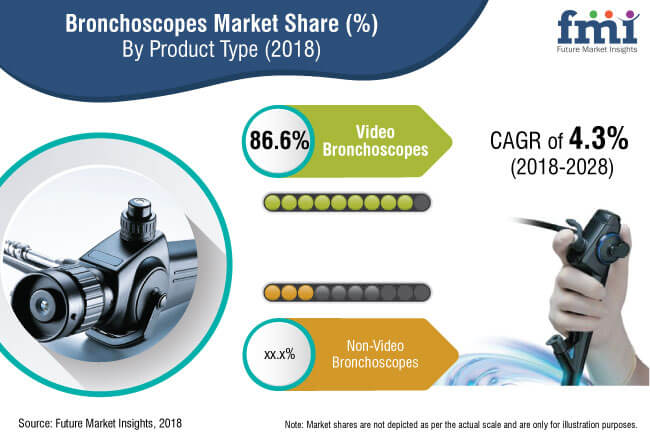
The report offers a comprehensive taxonomy of the bronchoscopes market based on product type, modality, end users and region. The product type segment of the bronchoscopes market includes video and non-video bronchoscopes. The modality segment of the bronchoscopes market includes rigid, flexible and mobile. The end users include hospitals, and outpatient centers.
The bronchoscopes market has been analyzed across regions of North America, Latin America, Europe, Asia Pacific and Middle East and Africa.
(Added: Wed May 29 2019 Hits: 0 Rating: 0.00 Votes: 0) Rate ItPages: [<<] ... 150 151 152 153 154 155 156 157 158 159 160 161 162 163 164 ... [>>]
Links SQL By: Gossamer Threads Inc.